Legends
Yorkshire Folklore for Beginners: 10 Local Legends and Creatures to Know
Yorkshire is a county that rewards curiosity. Walk a moorland track above Haworth, stand in the shadow of York Minster, or sit in a Dales pub while rain hammers the windows, and you are never far from a story that someone's grandmother swore was true. The county's folklore is not a tidy collection of fairy tales. It is a tangle of black dogs, water hags, boggarts and buried kings, shaped by the landscape that produced it: limestone caves, fast rivers, empty moors and a coastline that has swallowed villages whole.
What follows is a starting point. Ten creatures and legends, arranged so you can find them on a map, plus a few notes on how to read them properly.
1. The Barghest: Yorkshire's Most Famous Black Dog
The Barghest is the great black dog of Yorkshire folklore, and the name most people meet first. It is usually described as calf-sized, with shaggy fur, glowing eyes and claws that click on cobbles. In some tellings it is a death omen; in others it simply terrifies travellers and vanishes at a boundary, a bridge or a churchyard gate.
Where to look for it: York has the strongest claims, particularly around the snickelways and the old city walls. Whitby and the moors around Goathland also have their versions. If you want a starting point, the phrase "barghest" appears in nineteenth-century collections of northern dialect and legend, and it is often used loosely for any spectral dog.
How the Barghest differs from other black dogs
Britain has many phantom hounds, and they are not interchangeable. The Barghest tends to be tied to a specific place and a specific family or route. The Black Shuck of East Anglia is a cousin rather than the same beast. Keep the local name; it usually tells you something about the story.
2. The Guytrash and the Padfoot
The Guytrash is a West Riding relative of the Barghest: a shape-shifting spirit, often a dog, sometimes a calf or a headless figure, said to haunt lanes and follow travellers home. The Padfoot is its close neighbour in name and habit, particularly in the areas around Leeds, Wakefield and Huddersfield.
These are the stories you hear attached to particular roads. A farmer walking back from market hears footsteps behind him. He speeds up; the footsteps speed up. He looks back and there is nothing there, or there is something that should not be. The point is not the jump scare. It is the sense that the route itself is watched.
- Barghest — black dog, often a death omen, strongest in York and the North York Moors.
- Guytrash — shape-shifter of the West Riding, frequently encountered on lanes at night.
- Padfoot — a quieter, following presence, common in West Yorkshire place-lore.
- Boggart — a household or farm spirit, more nuisance than monster.
- Peg Powler — a river hag who pulls the unwary into the water.
3. Boggarts: The Mischief in the House
Boggarts are the domestic end of Yorkshire's supernatural population. They attach themselves to a farm, a house or a family, and they make life difficult in small, believable ways: knocking, spilling milk, hiding tools, souring the butter. They are rarely lethal. They are infuriating.
The standard remedy in the old stories is to move house. The family packs up, leaves, and a neighbour asks where they are going. A voice from the cart answers, "We're flitting." The boggart has come along. In some versions the family eventually learns to live with it, leaving out a bowl of cream and keeping the household in order.
You will find boggart stories all over the county, but they cluster around older farmsteads in the Dales, the Pennines and the Vale of York. Place names containing "boggart" — Boggart Hole Clough is just over the border in Lancashire — are a good sign that a story once lived there.
4. Peg Powler and the Dangerous River
Peg Powler belongs to the River Tees, though similar hags appear on other northern rivers. She is described as a green-haired woman who waits below the surface, grabs children and careless adults, and drags them down. The foam that gathers on the water was sometimes called Peg Powler's cream.
This is a warning story with a practical core. Fast rivers are genuinely dangerous, and communities that lived beside them used the tale to keep children away from the bank. Other Yorkshire waters have their own guardians: the River Wharfe, the Swale and the Ure all carry stories of submerged figures or spirits that take an interest in the living.
5. The Dragon of Wantley
Not every Yorkshire legend is grim. The dragon of Wantley, near Sheffield, is a comic monster said to have terrorised the area until it was killed by a local knight, More of More Hall, who wore a suit of armour studded with spikes and kicked the beast in its one vulnerable spot.
The ballad is old, rude and funny, and it may have been a satire on a real local dispute dressed up as monster-hunting. Wantley is a good reminder that folklore is not always solemn. Sometimes it is a village argument with scales on.
6. Mother Shipton and the Prophecy Tradition
Mother Shipton, the prophetess of Knaresborough, is one of Yorkshire's most enduring figures. Her cave and the petrifying well beside the River Nidd remain a visitor attraction, and the well's dripping water really does coat objects in a stony crust.
The historical Mother Shipton is hard to pin down, and many famous prophecies attributed to her were written long after the supposed dates. That does not matter much for folklore. What matters is the pattern: a local wise woman, a strange birth, a string of predictions, and a well that turns everyday objects to stone. It is the combination of place and story that keeps her alive.
7. The Wild Edric and the Fairy Bride
Edric the Wild is a border figure, tied to Shropshire and the Welsh Marches as much as to Yorkshire, but his story travelled. He married a fairy woman, lost her through a careless word, and was said to ride out with his men before wars and troubles.
Yorkshire has its own version of this theme: human men who marry supernatural women, break a condition, and lose them. The lesson is almost always the same. Do not ask the wrong question. Do not look where you were told not to look.
8. The Gytrash of the Moors and the Hound of the Baskervilles
Arthur Conan Doyle's The Hound of the Baskervilles drew on the black dog traditions of Dartmoor, but readers in Yorkshire have always recognised the type. The moors around Whitby, Pickering and the North York Moors have their own phantom hounds, often attached to old families and lonely roads.
If you are walking those moors, the stories are easy to understand. Mist comes down fast, the ground is boggy, and the sound of a dog carries a long way. The folklore did not need to invent much.
How to Read Yorkshire Folklore Well
A few habits will make the subject more rewarding, whether you are reading at home or visiting the places themselves.
- Follow the place name. Boggart, hob, hag, shuck and trash in a name often point to an older story.
- Check the date. Many "ancient" tales were collected or invented in the nineteenth century. That does not make them worthless, but it changes how you read them.
- Ask what the story was for. River hags kept children from the water. Boggarts explained bad luck on the farm. Black dogs marked boundaries and dangerous routes.
- Visit at the right time of year. Winter and dusk suit some tales better than a bright summer afternoon.
- Ask locally. Pub landlords, librarians and museum volunteers often know the version that is actually told, not just the one in the guidebook.
Start with one creature and one place. Read the Barghest in York, then walk the walls at dusk. Look up Peg Powler before a walk beside the Tees. Folklore is at its best when it is attached to a real landscape, and Yorkshire has plenty of that.
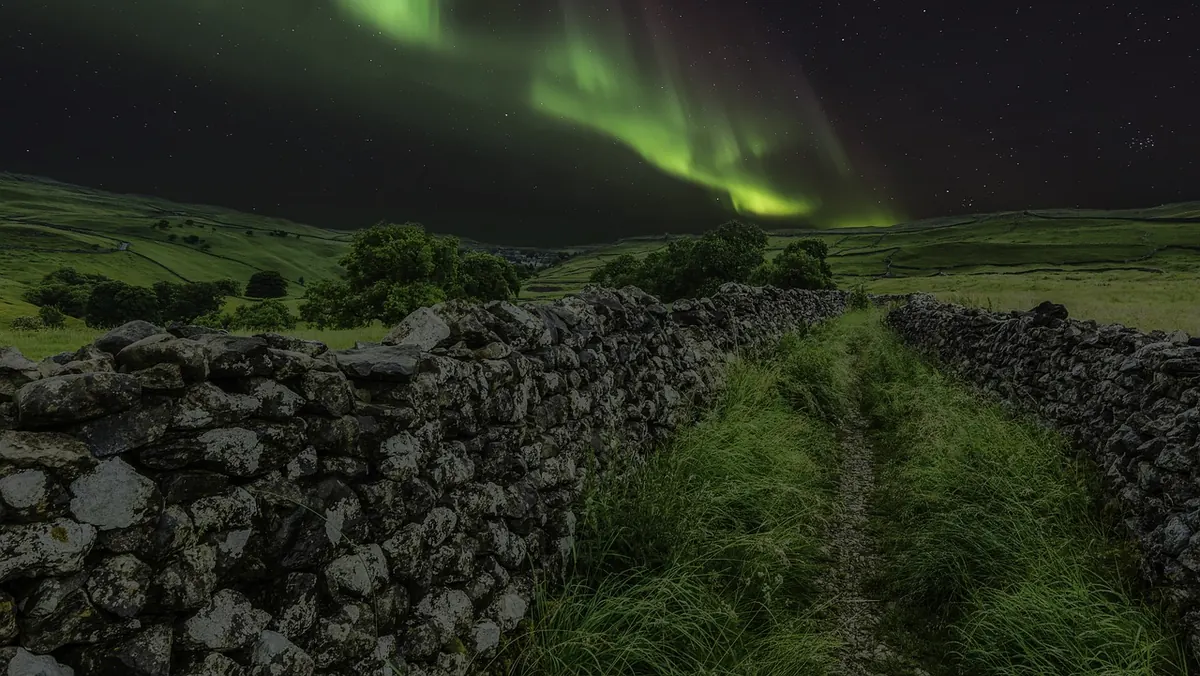
Photo: TimHill / Pixabay
Related Articles